



I was sitting in my home office the other day, asking Gemini to help me outline a complex project, when it hit me: we often treat AI like this ethereal, magical cloud that exists nowhere and everywhere at the same time. But the truth is much “heavier.” Every time I prompt an AI, a massive array of silicon and copper thousands of miles away hums with energy.
Lately, I’ve been diving deep into the physical reality of our digital future, and the numbers are honestly staggering. According to the JLL 2026 Global Data Centers Report, we are about to witness an infrastructure boom unlike anything in human history. We aren’t just building more servers; we are re-engineering the planet’s energy grid to keep up with our thirst for intelligence.
The $3 Trillion Price Tag for “Thinking” Machines
When I first saw the figure $3 trillion, I had to double-check if I was reading a typo. But it’s real. To keep up with the demands of AI by 2030, global data center capacity needs to double—jumping from 103 gigawatts (GW) to over 200 GW.
I’ve realized that we are moving past the “software phase” of the AI revolution and entering the “hard hat phase.” Major players like Microsoft, Google, and Meta are projected to spend $1 trillion just between 2024 and 2026. Why? Because the current infrastructure is literally gasping for air.
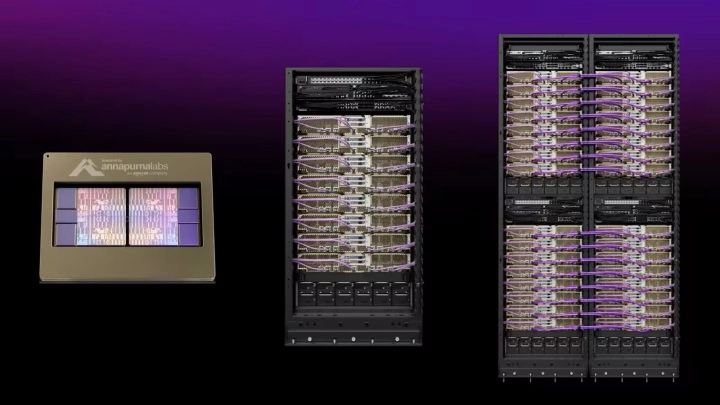
Here is what I find most fascinating: an AI-focused data center isn’t just a bigger version of a traditional one. It’s a different beast entirely. These facilities require up to 10 times the power density of a standard data center. We are cramming more “brain power” into every square inch, and that creates a massive heat and energy problem.
2027: The Year the Game Changes

One detail in the report really stood out to me: 2027 is the tipping point. Right now, most of the power is going toward training—teaching models like GPT-5 or Gemini 2 how to understand the world. But after 2027, the focus shifts to inference. This is the “real-time” use of AI. Think about it: once every car, every customer service bot, and every surgical assistant is running on AI 24/7, the constant “thinking” power required will dwarf the initial “learning” power.
I see this as a massive shift in how we value real estate and energy. We are moving from a world where “data is the new oil” to a world where “electricity is the new data.”
The Energy Bottleneck: A 4-Year Wait for a Plug

This is where things get frustrating. I’ve read reports showing that in many major tech hubs, the wait time to connect a new data center to the power grid is now over four years. Imagine being a tech giant with billions of dollars ready to spend, but you can’t get your “AI factory” online because the local power company doesn’t have enough cables. This bottleneck is forcing companies to get… creative. And honestly, some of these solutions sound like they are straight out of a sci-fi novel.
How Big Tech is Solving the Power Crisis:
- Going Nuclear: I was shocked (and a bit impressed) when I saw Microsoft sign a 20-year deal to restart the Three Mile Island nuclear plant. Using a 1970s nuclear site to power 2030s AI is the ultimate “old meets new” story.
- Gigawatt Campuses: Google and NextEra Energy are working on “Gigawatt-scale” campuses. These aren’t just buildings; they are self-sustaining cities with their own energy production and massive battery storage systems.
- On-Site Generation: Since the grid is too slow, many companies are building their own small modular reactors (SMRs) or massive solar farms right next to the servers.
The Global Map: Who Owns the “Brains”?

The geography of AI is shifting, but some things remain the same. While I’m seeing huge growth in the Asia-Pacific region, the Americas are still holding onto about 50% of the global capacity.
| Region | Current Capacity (Approx) | 2030 Projected Capacity |
| Americas | ~52 GW | ~100+ GW |
| Asia-Pacific (APAC) | 32 GW | 57 GW |
| EMEA (Europe/ME/Africa) | ~19 GW | 32 GW |
I’ve noticed that countries are starting to treat data center capacity as a matter of national sovereignty. If you don’t have the “compute” within your borders, you’re essentially outsourcing your country’s intelligence to someone else. I expect we’ll see more governments offering massive tax breaks just to get these 3-trillion-dollar investments on their soil.
My Perspective: The Irony of the Virtual World
I find it incredibly ironic. We spent the last two decades talking about “dematerialization”—how everything was becoming digital, light, and cloud-based. Yet, to make that “light” digital world smarter, we are digging more mines for copper, pouring more concrete for bunkers, and even restarting nuclear reactors.
The Goldman Sachs prediction that energy demand will rise 165% by 2030 is a wake-up call. We can’t have “Green AI” without a total revolution in how we produce and store energy.
I’m personally worried that the “digital divide” will now become a “power divide.” If only a few companies can afford to build these $100 billion campuses, what happens to the smaller startups? Are we heading toward a future where only three or four “AI Superpowers” own all the thinking capacity in the world?
What’s Next?
We are watching a literal reconstruction of the world’s physical infrastructure. The next five years won’t just be about better chatbots; they will be about high-voltage lines, liquid cooling systems, and next-gen batteries.
I have to ask you: As we build these massive energy-hungry hubs, do you think the benefit of “smarter AI” is worth the massive environmental and energy cost? Or should we be finding ways to make AI “leaner” instead of “bigger”?