I’ve been scrolling through X (formerly Twitter) lately, and honestly, the doomsday predictions are becoming exhausting. You know the ones: “AI will replace us by Tuesday,” or “The algorithms are about to gain consciousness and delete humanity.” It makes for great sci-fi movie plots, but as someone who lives and breathes tech every day, it often feels disconnected from the reality of the code running on our servers.
That is why I breathed a sigh of relief this week. Jensen Huang, the CEO of Nvidia—the man practically powering this entire AI revolution with his chips—stepped up to the microphone and essentially said: “Calm down.”
When the person selling the shovels for the gold rush tells you there is no magic genie in the mine, you listen. Huang’s recent comments about the impossibility of “God-like AI” are a necessary splash of cold water on a fire of hype that has been burning a little too bright.
Here is my deep dive into what Nvidia is really saying, why “AI Fear” is actually hurting us, and why the future is about tools, not overlords.
Deconstructing the “God-Like” AI Fantasy

First, let’s address the elephant in the server room. There is a term floating around Silicon Valley: AGI (Artificial General Intelligence). In its most extreme definition, people call this “God-like AI”—a system that knows everything, understands physics perfectly, and can reason better than any human in every possible field.
Jensen Huang isn’t buying it.
He argues that the idea of a machine possessing total competence across all domains—understanding the nuances of human language, the complexity of molecular structures, and the laws of theoretical physics all at once—is simply not possible with today’s technology.
Why We Aren’t There Yet
I think it is important to remember what Large Language Models (LLMs) actually are. They are prediction engines. They are incredibly good at guessing the next word in a sentence based on probability.
- They don’t “know” physics: They can recite formulas, but they don’t understand gravity the way an apple (or Newton) does.
- They don’t “feel” emotion: They mimic the patterns of emotional language.
- They lack context: A “God AI” would need to understand the chaotic, unwritten rules of the real world.
Huang pointed out that no researcher currently has the capacity to build a machine that understands these complexities fully. To quote him directly: “There is no such AI.”
My Take: I find this reassuring. We often confuse “access to information” with “wisdom.” Just because an AI has read the entire internet doesn’t mean it understands what it means to be alive or can solve problems that require intuition.
The Cost of “Apocalypse Anxiety”
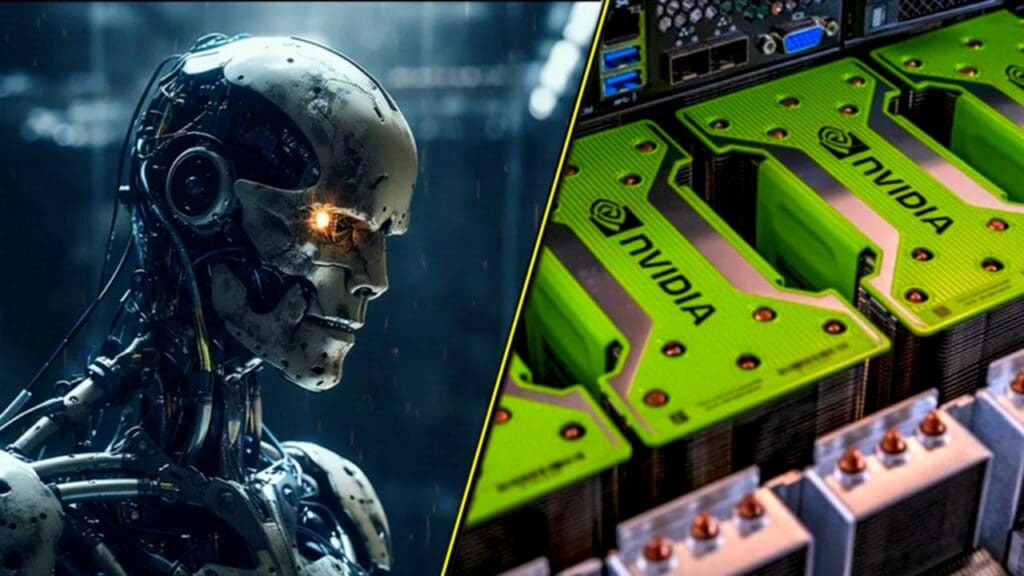
Here is where I think Huang hits the nail on the head. He believes that these “exaggerated AI fears” are actually damaging the tech industry and society at large.
When we obsess over a “Terminator” scenario, two bad things happen:
- Misguided Regulation: Governments might rush to ban technologies that could actually cure diseases or solve climate change, simply out of fear of a nonexistent threat.
- Distracted Focus: Instead of solving real problems (like making AI hallucinates less), developers get bogged down in philosophical debates about robot souls.
Huang calls these “doomsday scenarios” unhelpful. Mixing science fiction with serious engineering doesn’t help a startup founder fix a bug, and it doesn’t help a doctor use AI to diagnose cancer. It just creates noise.
The “Sci-Fi” Trap
We have all been conditioned by movies. We see a robot and immediately think of The Matrix. But Huang is reminding us that we need to look at AI the same way we look at a dishwasher or a calculator. Is a calculator a threat to mathematics? No, it’s a tool that lets mathematicians work faster.
A New Perspective: “AI Immigrants”
This was the part of Huang’s talk that really stuck with me. He used a fascinating metaphor to describe the future of robotics and AI in the workforce: “AI Immigrants.”
He isn’t talking about robots taking your job. He is talking about robots showing up where humans can’t or won’t work.
In many parts of the world, we are facing a massive labor shortage. Populations are aging. There aren’t enough people to care for the elderly, manage warehouses, or handle dangerous industrial tasks. Huang suggests that AI agents and physical robots can act as a supplemental workforce.
- The Support Role: Imagine a robot lifting heavy boxes so a human worker doesn’t hurt their back.
- The Efficiency Booster: Imagine an AI handling all the boring data entry so a creative director can focus on design.
He views AI as a way to close the gap between the work we need to do and the number of people available to do it. It’s not about replacement; it’s about augmentation.
The Economic Reality Check (Stanford & Fortune)
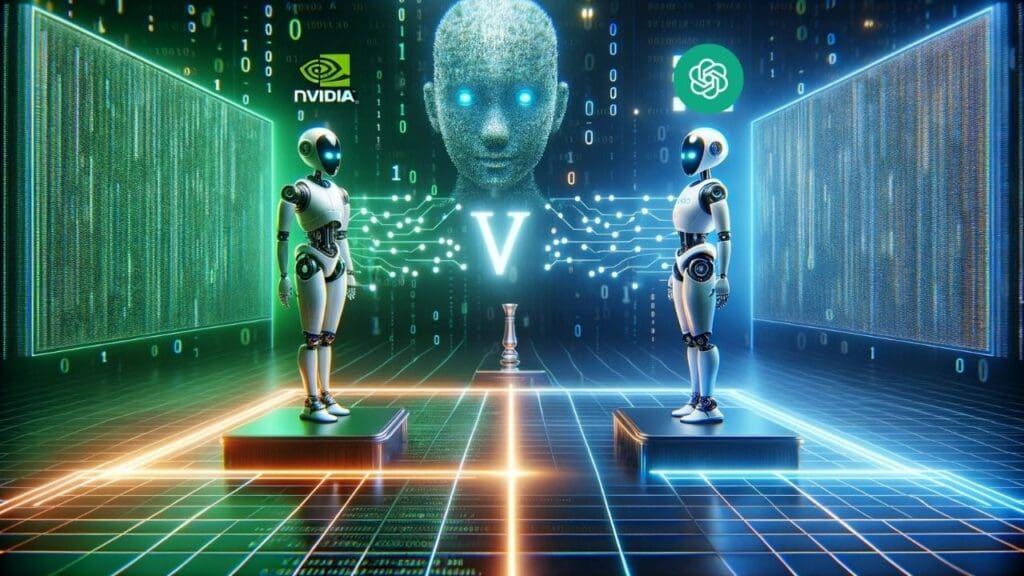
To back up Huang’s pragmatic view, let’s look at the data. I’ve been reading recent reports from Stanford University and Fortune, and they paint a picture that is very different from the hype.
Despite the billions of dollars poured into AI:
- Job Market Impact: The actual disruption to job listings has been surprisingly limited so far.
- ROI (Return on Investment): Many companies are struggling to prove that AI is actually making them more profitable right now.
We are likely in what analysts call the “Trough of Disillusionment.” The initial excitement is wearing off, and now companies are realizing that implementing AI is hard work. It requires clean data, new infrastructure, and training.
This aligns perfectly with Huang’s stance. If AI were truly “God-like,” it would have fixed the global economy overnight. The fact that it hasn’t proves that it is just software—powerful software, yes, but still subject to the laws of implementation and economics.
Why Centralized AI is a Bad Idea
Another point Huang touched on—and one I feel strongly about—is the danger of centralization.
He explicitly stated he is against the idea of a “One AI to Rule Them All.” The concept of a single, super-intelligent entity controlled by one company or one government is, in his words, “extremely useless” (and frankly, terrifying).
The Metaverse Planet Philosophy
In the crypto and metaverse communities, we value decentralization. We don’t want one brain making decisions for the planet. We want:
- specialized AIs for biology,
- creative AIs for art,
- logistical AIs for shipping.
We need a diverse ecosystem of tools, not a digital dictator.
While companies like Meta are building massive, nuclear-powered data centers (which is cool in its own right regarding infrastructure), the goal shouldn’t be to build a god. The goal should be to build better assistants.
Final Thoughts: The Path Forward
So, where does this leave us?
If we listen to Jensen Huang, we should stop checking the sky for falling robots. We should stop treating AI like a mystic force and start treating it like engineering.
The “God-level” AI isn’t coming to save us, nor is it coming to destroy us. What we have instead is a collection of rapidly improving tools that, if used responsibly, can make us more productive, healthier, and perhaps a little more creative.
I prefer this reality. It puts the responsibility back on us. The magic isn’t in the machine; it’s in how we choose to use it.
I’d love to hear your take on this: Does Jensen Huang’s statement make you feel more relaxed about the future of AI, or do you think he is downplaying the risks to keep selling chips? Let’s discuss it in the comments!